
Last Updated on October 6, 2026 by Hassan Abbas
Shih Tzu haircuts can make this small dog look completely different, from a round-faced teddy bear to a flowing show dog with a polished top knot. The best style is not simply the cutest photo you find online, because coat condition, brushing time, activity level, and facial comfort all matter. For U.S. Shih Tzu owners, the goal is to choose a haircut that looks good while remaining realistic to maintain between grooming appointments.
Quick answer: The best Shih Tzu haircuts balance appearance with maintenance. The puppy cut is the easiest everyday option, the teddy bear cut adds a rounded face, and a top knot preserves the breed’s signature look. Most short pet trims still need regular brushing and professional grooming about every four to six weeks.
| Haircut | Main Look | Maintenance | Best For |
|---|---|---|---|
| Puppy cut | Short, even, practical | Low to moderate | Everyday pet homes |
| Teddy bear cut | Short body, rounded face | Moderate | Plush, photo-friendly look |
| Summer trim | Shorter, lightweight pet trim | Low to moderate | Easy upkeep |
| Practical top knot | Short body, longer crown | Moderate | Signature Shih Tzu style |
| Full coat and top knot | Long, flowing coat | Very high | Dedicated coat maintenance |
| Lion cut | Short body, fuller head and neck | Moderate | Dramatic styling |
| Lamb-style trim | Short body, fuller legs | Moderate | Soft, sculpted appearance |
| Asian fusion trim | Stylized face and rounded legs | Moderate to high | Distinctive salon styling |
Why Shih Tzu Haircuts Need More Thought Than a Simple Trim
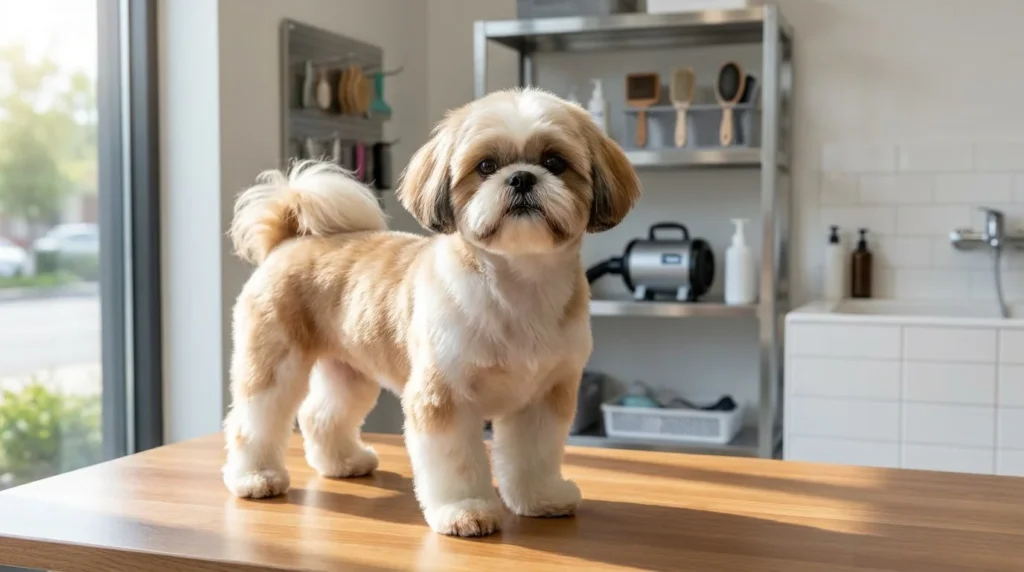
A Shih Tzu has a two-layer coat, with a long outer coat and a softer undercoat, so maintaining length requires consistent brushing rather than an occasional surface comb-through. The American Kennel Club notes that coat texture varies from dog to dog and can change when a Shih Tzu reaches roughly 10 to 12 months of age. Mats can develop when coat care falls behind, which is one reason many pet owners choose shorter, more manageable haircuts.
Hair around the face deserves particular attention because the breed’s eyes sit close to the areas a groomer must trim and shape. Owners can either keep facial hair short or maintain longer crown hair in a top knot to keep it away from the eyes. Long-coated Shih Tzus also require substantially more home care than dogs wearing practical short pet clips, in much the same way that long-haired breeds such as the Maine Coon need daily attention to stay free of tangles.
1. Puppy Cut
The puppy cut is one of the most practical Shih Tzu haircuts for owners who want a neat dog without committing to a full coat. The body is clipped to a relatively short, even length, while the face, ears, tail, and legs can be adjusted to suit the owner’s preference. It gives an adult Shih Tzu a youthful appearance while making brushing and bathing easier to manage.
There is no single universal measurement that every U.S. grooming salon calls a puppy cut, so the name alone may not produce the result you expect. Some groomers leave approximately an inch of coat, while others interpret the style a little longer or shorter depending on coat condition and client preference. Bringing a reference photo and agreeing on the approximate body length before the appointment can prevent misunderstandings.
2. Teddy Bear Cut
The teddy bear cut retains the practical advantages of a shorter body while placing greater emphasis on the head shape. A groomer carefully rounds the cheeks, muzzle, and surrounding hair to create the plush, stuffed-animal appearance associated with this style. The ears may also be shaped to blend into the face rather than creating a sharply defined outline.
This haircut usually needs more facial maintenance than a basic puppy cut because the rounded effect depends on keeping the longer face hair clean and free of tangles. Hair near the eyes should remain controlled rather than being allowed to grow forward and interfere with the dog’s face. If you love the teddy bear appearance but have limited brushing time, ask your groomer for a shorter version of the rounded face.
3. Short Summer Trim
A summer trim generally means a short, easy-care pet haircut designed to reduce the amount of long coat an owner must manage. Some salons use “summer cut” and “puppy cut” almost interchangeably, while others use the term summer cut for a noticeably shorter version. Because terminology varies, tell the groomer how much coat you actually want left, rather than requesting a name alone.
A shorter haircut can be especially convenient for active dogs that collect grass, dirt, or debris in a longer coat, which is worth thinking about before dog-friendly countryside breaks and other outdoor trips. It can also make bathing, drying, and checking the skin easier for owners who struggle to maintain several inches of hair. However, a short style still needs brushing because reduced coat length does not eliminate tangles in areas of friction, such as the ears, legs, and harness.
4. Practical Top Knot
The practical top knot combines a relatively short body with longer hair on the crown that can be gathered above the eyes. It gives owners some of the unmistakable Shih Tzu character of the traditional top knot without requiring a floor-length coat. The rest of the face can be kept comparatively short, making the style easier to live with than a full show presentation.
The crown hair still needs regular combing and re-tying because leaving a banded section unattended can allow tangles to develop underneath it. AKC grooming guidance recommends daily care for the mustache and topknot when those areas are kept long—owners who do not want to maintain that routine should consider a short, open face instead.
5. Full Coat With a Top Knot
The long Shih Tzu coat is the classic look associated with dogs seen in the show ring, where the hair can fall toward the floor, and the crown is gathered into a top knot. It is visually striking, but it is also the most demanding option in this guide. A full coat requires an owner who is willing to brush carefully and consistently rather than relying only on professional grooming appointments.
AKC guidance recommends daily brushing for long-coated Shih Tzus and daily combing of the mustache and topknot. Bathing and thorough drying also become more important as coat length increases because dirt and tangles can become harder to manage. For most companion dogs, this should therefore be viewed as an ongoing grooming routine rather than simply a haircut choice.
6. Lion Cut
The lion cut creates contrast by keeping the body shorter while leaving noticeably more hair around the head and neck. The fuller front is shaped to suggest a small mane, while the shorter torso reduces the amount of long coat that needs regular brushing. Owners can also ask for a fuller tail to balance the finished silhouette.
This is a good example of why photographs are more useful than haircut names at a grooming appointment. One groomer may create a dramatic mane, while another may produce a softer transition that looks closer to an extra-full teddy bear head. Decide how much contrast you want between the neck and body before the clipping begins. More from us: Siamese Cat Names.
7. Lamb-Style Trim
A lamb-style Shih Tzu trim generally combines a shorter body with legs that are deliberately left fuller and shaped with scissors. The contrast can make the legs look plush without requiring the entire dog to carry a long coat. A rounded face, longer ears, or a fuller tail can then be added according to the owner’s preferred finish.
The fuller leg hair means this cut is not as maintenance-free as its short torso may suggest. Legs frequently encounter wet grass, dirt, and friction, so they need to be combed thoroughly to prevent hidden tangles. Ask your groomer whether your dog’s coat density is suitable for the shape you want rather than expecting every Shih Tzu to reproduce the same reference photo exactly.
8. Asian Fusion-Inspired Cut
Asian fusion grooming uses more creative proportions than a conventional breed-style pet trim, often combining a short body with highly rounded legs, a sculpted muzzle, or other exaggerated soft shapes. Shih Tzu coats can work well for this kind of styling, and specialized groomers may customize the finish according to the individual dog’s coat and facial structure. The result can look especially distinctive when an owner wants something beyond a traditional puppy or teddy bear cut.
This style depends heavily on scissoring skill, so choosing the right groomer matters as much as choosing the haircut. Look through a salon’s portfolio for Shih Tzus or other drop-coated toy breeds before requesting a detailed Asian fusion finish. A reference photo from the groomer’s own work is particularly useful because it shows what that stylist can realistically reproduce.
Puppy Cut vs. Teddy Bear Cut: What Is the Difference?
The puppy cut and teddy bear cut are often confused because both can use a similar short body length. The main difference is usually the face, with a puppy cut emphasizing an easy, practical finish while a teddy bear cut deliberately creates fuller, rounder cheeks and muzzle hair. Grooming terminology is not completely standardized, however, so showing your groomer the face shape you want is more reliable than relying on either name.
A puppy cut is usually the better choice when minimum upkeep is the priority, while the teddy bear style works well for owners willing to comb and maintain more facial hair. Neither option eliminates home grooming because ears, legs, the face, and other friction areas can still develop tangles. The best choice is the one you can maintain comfortably until the next salon appointment.
How to Choose the Best Shih Tzu Haircut
Start by being realistic about how often you will brush your dog at home, rather than choosing entirely based on appearance. A household that enjoys daily coat care can maintain longer hair, while an owner who wants faster grooming will usually be happier with a puppy cut or another short pet trim. Your dog’s existing coat condition also matters because a groomer cannot safely preserve length that is already heavily tangled or matted.
Before the appointment, decide on the details that affect the final result most:
- Choose the approximate body length in inches, not only the haircut name.
- Decide whether you want a round teddy face, short face, or top knot.
- Specify whether the ears should stay long or be shortened.
- Tell the groomer whether you prefer full or closely trimmed legs and feet.
- Decide how much length you want to keep on the tail.
- Bring one or two clear reference photos showing a similar Shih Tzu.
- Ask what brushing routine the finished haircut will require at home.
Reference photos are particularly important because the same haircut label may be interpreted differently from one salon to another. MoeGo’s grooming guidance similarly recommends photos because styles such as puppy cuts and teddy bear cuts can have multiple variations. A good consultation should leave both you and the groomer clear about length, facial shape, ears, legs, and maintenance before work starts.
How Often Does a Shih Tzu Need a Haircut?
For a Shih Tzu wearing a puppy clip, the American Kennel Club says professional grooming is typically needed about every four to six weeks. The exact schedule can shift according to coat growth, haircut length, brushing habits, and how quickly the face begins to look overgrown. Booking the next appointment before leaving the salon can make it easier to maintain a consistent shape, rather than waiting until tangles or excessive growth become a problem.
Long-haired dogs require substantially more work between those appointments because daily brushing becomes part of normal coat maintenance. Even short-haired Shih Tzus should still be checked regularly behind the ears, under the legs, around equipment such as harnesses, and anywhere else friction can encourage tangles. A haircut reduces the workload, but it does not replace grooming altogether.
Be Careful With At-Home Face Trimming
Trimming a STzu’szu’s face yourself may look straightforward, but the eye area leaves little room for mistakes when a dog suddenly moves. Daily Paws cites veterinary guidance recommending professional grooming when either the owner or dog is not calm and comfortable with facial trimming. The source also notes that the breed’s compact facial features make careful trimming around sensitive areas particularly important.
Between professional appointments, owners can focus on gentle combing and keeping facial hair from becoming tangled rather than attempting complicated reshaping. If the hair repeatedly grows into an awkward position around the eyes, ask the groomer to modify the next haircut so the area stays manageable for longer. Any redness, persistent discharge, squinting, or apparent eye discomfort should be discussed with a veterinarian rather than treated as a cosmetic grooming problem.
The Bottom Line
The best Shih Tzu haircuts are those that suit both the dog and the owner’s actual grooming routine. Puppy and short pet cuts make everyday maintenance easier; teddy bear and lamb-style trims add more sculpted detail, and top knots or full coats work best when regular brushing is genuinely part of the household routine. Choose the look you like, bring a reference photo, and ask your groomer to adapt it to your Shih Tzu’s individual coat rather than trying to copy another dog exactly.
Frequently Asked Questions
What is the best haircut for a Shih Tzu?
For many companion Shih Tzus, a puppy cut is one of the most practical choices because it keeps the coat manageable without completely removing the breed’s fluffy appearance. A teddy bear cut is a good alternative when you want a rounder, more styled face and are comfortable doing slightly more home maintenance. Dogs kept in full coat can look spectacular, but that option requires much more frequent brushing and coat care.
What is the easiest Shih Tzu haircut to maintain?
A short puppy cut or similar short pet trim is generally among the easiest options to maintain. Less coat length means less brushing and faster bathing and drying, although tangles can still form in areas such as the ears and legs. Professional grooming every 4 to 6 weeks can help maintain shape and a manageable length.
What is the difference between a puppy cut and a teddy bear cut?
A puppy cut usually focuses on keeping the overall coat short, even, and convenient. A teddy bear cut places more emphasis on hand-scissoring the head into a rounded shape with fuller cheeks and muzzle hair. Since salon terminology varies, a photo is the best way to communicate exactly which version you want.
Do male and female Shih Tzus need different haircuts?
Male and female Shih Tzus do not require fundamentally different haircut styles simply because of sex. Coat condition, facial structure, activity level, climate, and the owner’s maintenance routine are more useful factors to consider when choosing a style. Bows, longer ears, top knots, short faces, and other finishing details can be used on any dog according to preference.
How often should a Shih Tzu be professionally groomed?
A commonly recommended interval for a Shih Tzu in a puppy clip is roughly every four to six weeks. Dogs with longer coats still need substantial brushing and maintenance at home between salon visits. Your groomer may suggest a different interval if your dog’s coat grows particularly fast or tends to mat easily.
