
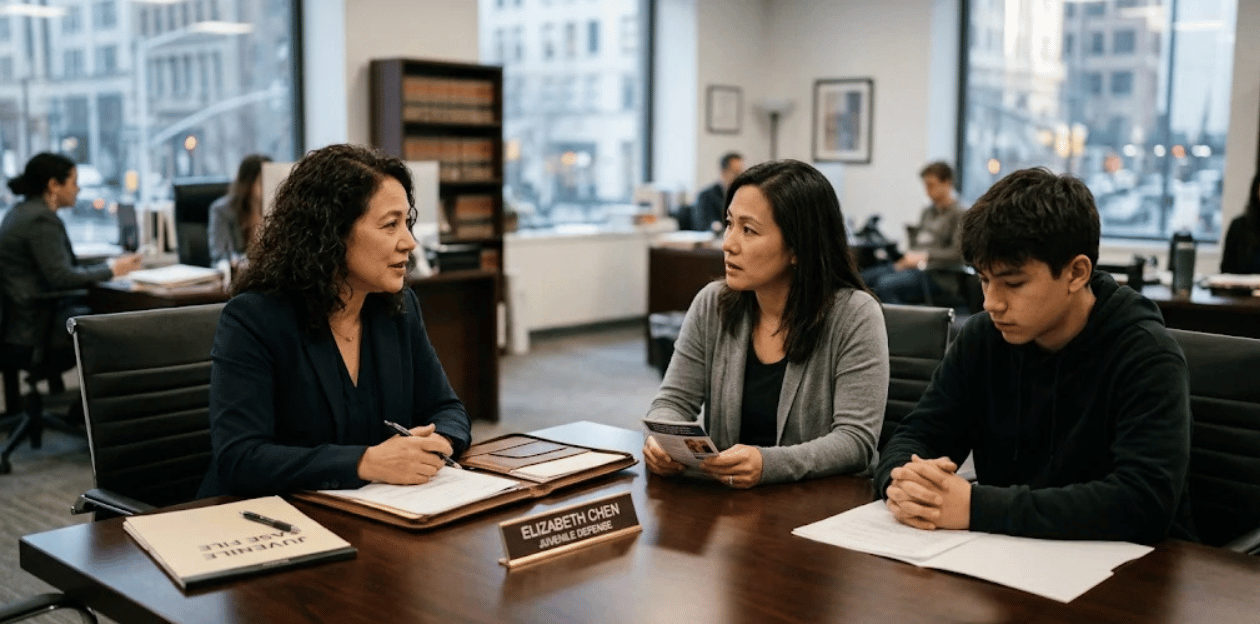
When a child faces criminal allegations, the next decisions can affect far more than the upcoming court date. A juvenile defense attorney protects the child’s legal rights while addressing the special rules of juvenile court. Parents should seek qualified legal guidance quickly because procedures, deadlines, and possible outcomes vary by state.
Direct answer: A juvenile lawyer represents a young person accused of delinquent conduct or a crime. The lawyer reviews evidence, challenges improper procedures, advises the child, and advocates during hearings. Counsel may also address detention, diversion, transfer to adult court, disposition, and future record consequences.
| Key question | What parents should know |
|---|---|
| Who does the lawyer represent? | The child is the client, even when parents hire the lawyer |
| Does a child have legal rights? | Yes, including important due-process protections |
| Can parents hire private counsel? | Generally yes, subject to local court procedures |
| Is appointed counsel available? | Eligible youth may receive a public defender or appointed lawyer |
| Can a case enter adult court? | Yes, under transfer rules that vary by state |
| Are juvenile records always private? | No. Access, sealing, and expungement rules vary |
| What should families do first? | Avoid discussing case facts publicly and seek state-specific legal advice |
Why Juvenile Court Requires Specialized Legal Help

Juvenile courts operate differently from ordinary adult criminal courts. The system generally emphasizes rehabilitation, public safety, and age-appropriate responses. State laws still control which court hears a case and which procedures apply.
The terminology also differs from adult criminal proceedings. Courts may use terms such as petition, adjudication, disposition, delinquency, or detention. Understanding those differences helps families avoid making assumptions based on adult criminal cases.
Juvenile proceedings can still carry serious consequences. A court may order probation, treatment, community programs, restitution, placement, or detention where state law permits. Some allegations can also create a risk of prosecution in adult criminal court.
The Supreme Court changed juvenile justice significantly through In re Gault in 1967. That decision recognized essential due-process protections for youth facing delinquency proceedings. These protections include counsel, notice, confrontation, and protection against compelled self-incrimination.
What Does a Juvenile Defense Attorney Do?
A juvenile defense attorney represents the young person, not the parents. That distinction can surprise families who are paying private legal fees. The lawyer must protect the child’s lawful interests and maintain the required attorney-client relationship.
Effective representation begins with learning what happened before and after the alleged offense. Counsel can review reports, recordings, witness statements, digital evidence, school information, and other relevant records. The lawyer can then evaluate whether the government can prove its allegations.
Defense counsel also examines how authorities obtained evidence. Police questioning can raise special concerns when a young person does not understand legal consequences. Federal juvenile-justice guidance notes that adolescents may be particularly vulnerable during interrogation.
A lawyer may challenge evidence when constitutional or procedural problems exist. Counsel can also negotiate with prosecutors when negotiation serves the client’s goals. If the case proceeds to adjudication, the lawyer prepares the defense and questions the government’s evidence.
What Happens After a Juvenile Is Arrested or Charged?
The exact process depends on state law and the alleged offense. Some cases begin with police contact and release to a parent. Others may involve detention and a prompt court hearing.
Families may then encounter several stages before the case ends. Each stage can affect whether the child remains home, enters a program, contests allegations, or faces another outcome. Legal advice is especially valuable before the child makes statements or accepts an agreement.
A typical case may involve the following sequence:
- Police contact or arrest: The child may be questioned, released, or taken into custody.
- Initial or detention hearing: A court considers custody and other immediate issues.
- Petition or formal charging: The government identifies the alleged delinquent conduct.
- Evidence review: Defense counsel obtains and evaluates available evidence.
- Negotiation or diversion review: Eligible cases may have alternatives to formal adjudication.
- Adjudication hearing: The court determines whether the allegations were proved.
- Disposition: The judge decides the appropriate legal response after an adjudication.
- Post-case options: Depending on state law, later relief may include sealing or expungement.
Not every case passes through every stage. OJJDP reports that juvenile courts can handle qualifying cases informally instead of filing a formal petition. Available alternatives depend heavily on the jurisdiction and circumstances.
Readers learning court terminology may also find NewsJoury’s plain-English explanation of magistrate judges useful. Judicial titles and authority differ across court systems. Confirm the role of each official in the court handling the child’s case.
Can a Juvenile Case Be Transferred to Adult Court?
Some youth can face prosecution in adult criminal court. Transfer rules depend on factors such as age, alleged offense, prior history, and state law. Parents should never assume that being under 18 automatically guarantees juvenile-court jurisdiction.
States use different mechanisms for moving qualifying cases into criminal court. These can include judicial waiver, statutory exclusion, and prosecutorial filing authority. OJJDP reports that states maintain multiple approaches to imposing adult sanctions on minors.
Transfer risk makes early legal advice especially important in serious cases. Defense counsel may need to address rehabilitation potential, developmental factors, prior history, treatment options, and community support. The precise arguments available depend on the governing state statute.
Adult prosecution can change procedures and possible consequences significantly. It may also change which court hears the case and which sentencing rules apply. Families facing possible transfer should seek counsel experienced with both juvenile and criminal proceedings.
Public Defender or Private Juvenile Lawyer?
Young people have important rights to counsel in qualifying delinquency proceedings. Families who cannot afford private representation may qualify for appointed counsel under applicable law. Eligibility procedures and possible family costs vary among jurisdictions.
A public defender can be an experienced juvenile advocate. Private representation can offer another option when a family wants to select counsel directly. The important question is whether the lawyer regularly handles youth cases in the relevant court.
Private legal costs also vary widely. Lawyers may use flat fees, hourly billing, retainers, or separate fees for different stages of the case. Ask for a written explanation of pricing and what services the quoted cost includes.
Families should also ask whether hearings, investigations, experts, or trial preparation cost extra. A consultation can clarify the expected scope before anyone signs an agreement. Never choose counsel solely because one quoted fee is the lowest.
NewsJoury’s guide to how attorney fees and representation work in workers’ compensation cases explains similar questions about retainers and fee agreements. Juvenile cases follow different laws, but transparent billing remains important. Always request terms that apply specifically to the child’s case.
How to Choose the Right Lawyer for a Juvenile Case
Look for direct experience in the juvenile court where the matter is pending. Adult criminal-defense experience can help, but youth representation requires additional knowledge. Counsel should understand local procedure, diversion options, developmental issues, and transfer rules.
Ask how the lawyer communicates with young clients. Good youth representation requires explanations that a child can understand. National youth-defense guidance emphasizes developmentally appropriate communication and meaningful client participation.
Parents should also understand who makes legal decisions. The lawyer can listen to family concerns and explain available options. Still, the attorney represents the child’s legal interests rather than treating the parent as the client.
Communication practices matter throughout the case. Ask who will handle hearings and how often the office provides updates. You should also learn what documents the lawyer wants before the first substantive meeting.
What Parents Should Do Immediately
Avoid asking the child to explain case details by text message or on public social media. Those communications can create unnecessary problems later. Instead, preserve relevant documents and let counsel advise the family about case discussions.
Keep every court notice, release document, police record, and school-related record connected with the matter. Write down upcoming dates and important contacts. Accurate organization helps counsel understand what has happened without relying on memory alone.
Parents can support a child without taking control of the legal defense. School attendance, treatment, employment, counseling, or community participation may become relevant in some cases. A lawyer can explain which information matters under local law.
Do not rely on general online advice for filing deadlines or court requirements. Juvenile law differs considerably among states. Confirm urgent requirements with the court or a licensed attorney in the jurisdiction.
Juvenile Records and Future Consequences
Parents sometimes assume juvenile records disappear automatically at adulthood. That assumption can be dangerous because record rules vary. Sealing, confidentiality, disclosure, and expungement depend on state law and the case outcome.
A juvenile record can matter in situations beyond the immediate hearing. The potential effect depends on the jurisdiction and the type of record involved. Counsel can explain what may remain accessible and whether future relief is available.
Families should discuss record consequences before resolving a case. An agreement that ends the immediate proceeding may still create later concerns. Asking about sealing or expungement early can prevent surprises after the court case ends.
When Should You Contact a Lawyer?
Contact qualified counsel as soon as a child faces police questioning, detention, formal charges, or a court notice. Early representation gives counsel more time to preserve information and examine available options. Waiting can reduce the time available before an important hearing.
The need becomes more urgent when detention or adult-court transfer is possible. Serious allegations may require investigation before evidence becomes harder to obtain. A lawyer can also explain what the child should expect at the next hearing.
NewsJoury does not provide individual legal advice or attorney representation. Families should contact a licensed lawyer or appointed defense office in the state handling the case. Local counsel can apply current law to the child’s specific circumstances.
Frequently Asked Questions
Does a child have the right to a lawyer in juvenile court?
Youth have constitutional counsel protections in qualifying delinquency proceedings under In re Gault. State laws can provide additional protections and appointment procedures. Families should confirm the applicable rules with the court or licensed local counsel.
Can parents speak for their child in juvenile court?
Parents generally cannot replace the child’s attorney when legal representation is required. Counsel represents the young client and handles legal advocacy. Parents can still provide useful background, records, and support.
When is a juvenile defense attorney most important?
A juvenile defense attorney becomes especially important when liberty, detention, serious charges, or adult-court transfer may be involved. Counsel can also help when evidence or police questioning is disputed. Earlier advice generally gives the lawyer more time to assess available options.
Can a juvenile be tried as an adult?
Yes, state laws can permit certain youth cases to proceed in adult criminal court. Transfer mechanisms and eligibility rules differ by jurisdiction. OJJDP identifies judicial waiver, statutory exclusion, and prosecutorial discretion among the major mechanisms.
Are juvenile records automatically sealed at age 18?
Not necessarily, because states use different rules for confidentiality, sealing, and expungement. Eligibility can depend on the offense, outcome, age, and later history. A lawyer familiar with local law can explain available record-relief procedures.
How much does a juvenile lawyer cost?
There is no single national price for private juvenile representation. Costs can depend on location, complexity, hearings, investigation needs, and whether a case reaches trial. Ask each lawyer for written pricing and a clear explanation of included services.
The Next Step for Families
A juvenile case deserves prompt attention because the system has its own rules and consequences. Parents can help by preserving records, avoiding public case discussions, and arranging qualified legal advice. Fast action gives counsel more time to understand the allegations and protect the child’s rights.
If your child has been questioned, detained, or charged, contact a licensed juvenile-defense lawyer in the relevant state. Families who cannot afford private counsel should ask the juvenile court about appointed representation. The right lawyer can explain the next hearing, available defenses, and realistic options under local law.
